Chain link fencing earns its keep by being tough, economical, and quick to service. It survives a lot of abuse along alleys, schools, warehouses, and backyards. Still, wind loads, creeping vines, lawn equipment, vehicles cutting corners, and even frost heave will eventually find a weak point. When a section fails, the fix is rarely a full tear-out. With the right approach and a practical understanding of how the system works, you can restore strength and appearance without paying for a new line. This guide walks through how experienced crews and an attentive property owner tackle chain link fence repair, where to draw the line between patching and replacement, and what separates a lasting fix from one that sags again next season.
How a chain link fence carries load
If you understand where the strength lives, you’ll diagnose damage faster and repair it more cleanly. In chain link, the woven fabric is not the main structure. The posts take vertical and lateral loads, the top rail and tension wire distribute those loads, and the fabric acts like a membrane that transfers wind force and contact back to the frame. Terminal posts, the ones at corners, ends, and gates, handle most of the tension. Line posts simply keep the rail spacing and hold the fabric plumb.
When a section bows or billows, look first to the components that were supposed to hold the line straight. A crushed top rail, a loose brace band at the terminal post, a broken tie wire pattern, or a missing bottom tension wire can make a straight run look tired even if the fabric is intact. Conversely, if a car or mower chewed through the mesh, you may only need to replace a panel of fabric and a handful of ties, provided the framework is straight and set.
Common damage patterns and what they mean
Over thousands of feet of chain link fence installation and repairs, the same failure modes keep showing up. Each points to a different root cause.
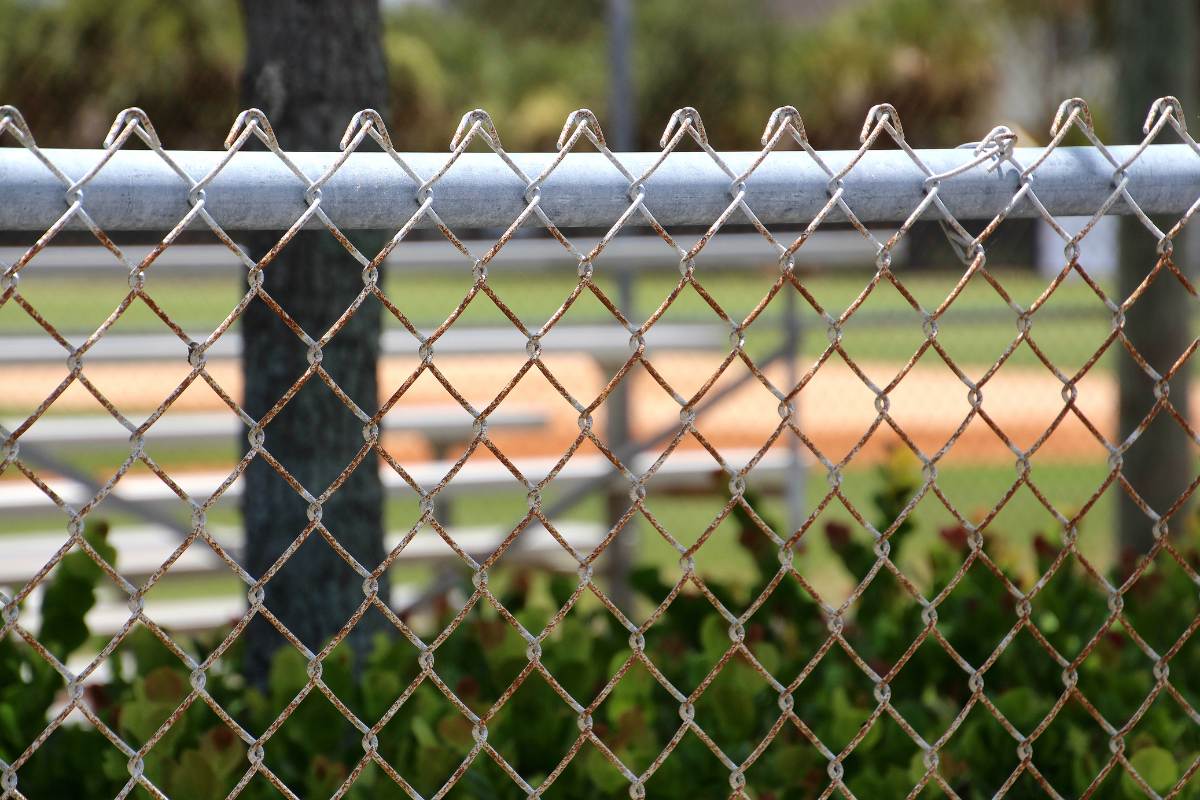
- Bowed fabric between posts. Usually a tension issue. Either the fabric was never stretched properly during installation, the top rail has a kink, or the bottom tension wire is missing or broken. If the bow coincides with a line post, check for a loose or missing rail end or a broken tie pattern. Crushed or kinked top rail. Often from a fallen limb or equipment impact. The splice sleeves can also slip on undersized or corroded rail. One kink ruins the straightness over several bays because it introduces a hinge. Replacing a rail section and resetting the splices usually restores alignment. Leaning posts. Frost heave, soft subgrade, shallow footings, or vehicle strike. If the concrete collar broke or the hole is undersized for the post height, expect recurrent lean. Posts out of plumb shift tension and create sagging fabric nearby. Torn or cut fabric. Vandalism, tree limbs, or a vehicle. Small tears can be trimmed out and re-woven with a new picket, but widespread deformation means a fabric panel replacement is faster and cleaner. Rusted components. In coastal or industrial settings, uncoated hardware, low-galvanization fabric, and cut ends without protection corrode first. Once rust shows through on the welded seams of a terminal post cap or brace band, plan to replace the part rather than trying to treat in place. Gate trouble. Gates sag because of hinge wear, undersized hinge bolts, or a spread gate frame. A low gate drags and pulls fabric nearby out of true, which is why gate adjustments often feature in what looks like a “fence” repair.
Understanding these patterns helps you decide where to spend effort. Many service calls that look like fabric issues resolve at the terminals with a few turns on a tension bar and properly set brace bands.
Safety and prep that prevent do-overs
Repairs happen in real environments, not neat jobsite labs. I’ve cut into chain link with morning dew on the grass and realized a live irrigation line ran three inches from a leaning post. I’ve watched a stretched section snap back because a tension bar wasn’t properly captured by brace bands. Preparation makes the difference between a tidy, under-budget repair and a second trip.
Map utilities before you dig or reset posts. Even when replacing a single terminal, call in a locate or use as-built drawings. Mark the fence line and the property line if they differ, especially along alleys. Take load off the section before opening it. Back out the tie wires along the top rail and unhook the bottom tension wire so the fabric is not hanging on one point. Brace gates or park a vehicle with a strap on a corner before relieving tension. Wear eye protection when cutting fabric and rail. The cut ends are unforgiving, and the fabric will spring.
Have the right replacement stock on hand. Fence suppliers carry oddball sizes that box stores rarely do, especially when matching an older installation. Rail often comes in 21-foot lengths. Fabric comes by roll height and gauge, and coatings differ. Match gauge, mesh size, and coating, or you’ll see the patch from across the lot.
Fixing sagging fabric without replacing everything
When a section between two terminals sags but the posts are sound, you can re-tension the fabric. Start by removing tie wires along the top rail for the length you want to correct, plus one bay beyond on each side to prevent stress concentrating at a single tie. Detach the bottom tension wire from the fabric in the same span.
Find the closest selvage where you can remove one picket to open the fabric cleanly. Unweave a single spiral at a full-height seam to separate the fabric. Add a tension bar to the cut edge. At the nearest terminal, loosen the brace bands that capture the existing tension bar, then walk the fabric tighter. If the original installer left a generous fabric tail, you can shift fabric toward the terminal, trim a row or two, and re-engage the tension bar in the brace bands. If not, add an inline tension bar where you opened the panel and use a come-along or ratchet puller anchored to the terminal to take up slack. Once plumb and taut, lock the brace bands evenly top and bottom, reattach the bottom tension wire, and reinstall tie wires at consistent spacing.
A good rule is a tie every 12 to 18 inches on the top rail and every second diamond on the tension wire. Too few ties lets the membrane balloon on windy days. Too many ties make future repairs tedious and create stress points.
Replacing a damaged fabric panel
If a mower carved a bite out of the fence or vandals opened a clean cut, a panel replacement is more efficient than endless weaves and splices. Measure the height of the existing fabric, the mesh size, and the wire gauge. Measure the distance between the nearest two terminal points where you can secure a tension bar, typically a corner, an end post, or a gate frame post with proper brace bands. You are aiming to replace fabric between secure anchor points, not arbitrarily in the middle of a span.
Unweave a picket to separate the damaged section at both seams. Cut away the destroyed portion. If the terminal hardware is compromised, plan to replace brace bands and bolts. Hang a new panel that is one to two diamonds wider than the measured span so you have working room. Slip tension bars into both panel edges. Use a ratchet puller to bring the panel to tension against the terminal. True the diamonds so they are vertical, not tilted. Install and tighten brace bands top and bottom, keeping clamp force balanced so the bar sits straight. Trim any extra diamonds cleanly by unweaving a picket rather than snipping every knuckle. Re-tie the panel to the top rail and bottom wire at the proper spacing.
A neat panel replacement has two virtues. First, the repair blends in. Second, the tension travels through the bars to the terminals instead of relying on tie wires, which are only retainers.
Repairing or upgrading the top rail
A bent top rail telegraphs its kink across several bays, even if the fabric holds. Look for the splice sleeves. Many older chain link fences used light-gauge couplers that loosen. You can often correct a shallow bow by breaking the rail apart at a sleeve, re-crowning each section, then reassembling with new self-tapping screws or upgraded sleeves that lock. Deep kinks require a section replacement.
Cut out the damaged rail at the nearest couplers. If you are cutting mid-span, install a coupler on each new end and add a short filler piece cut from new rail. Dry-fit and clamp before driving screws. Check post caps and loop caps. A distorted loop cap can twist the rail and create a visual wave. Replace bent caps while you’re there. After reassembly, rebalance rail ties to the fabric so the ties carry the same pattern left and right of the repair.
If the fence sees consistent impact, consider upgrading that run with a heavier 1.315 inch top rail instead of 1.25 inch nominal, or a schedule 40 where the budget allows. A chain link fence contractor with commercial work under their belt will stock both sizes and proper sleeves.
Resetting a leaning post
There’s no shortcut when a post is out of plumb. Anything you do to the fabric will be temporary until the foundation is sound. First, unload the post. Remove ties, release local fabric tension, and loosen nearby brace bands so the framework does not fight you. Shore the fabric with a temporary 2 by 4 if needed.
Dig out the existing concrete collar if present. For a typical 6-foot fence, a post hole should run 24 to 30 inches deep, wider in poor soils. In frost country, the hole must reach below the frost line to avoid heave. Bell the bottom of the hole to resist lifting. Set the post with concrete and a slight crown at grade so water sheds away. Align the post in both axes using a post level, then brace it until the concrete takes a set. Many service crews use fast-set mix for small resets because it shortens downtime, but full-cure mixes develop better long-term strength. In clay or saturated soils, add gravel at the base for drainage. Only re-tension the fabric after the post is firm.
If several posts lean in the same direction, look at grade changes and wind exposure. Sometimes adding mid-span braces or a top rail upgrade across that run pays back in fewer service calls.
Bringing a gate back into line
Gates focus wear. A sagging gate frame drags and magnifies fence issues because users shove harder to close it. Start at the hinges. If the hinge bolts are loose or the threads are stripped, replace them with proper gate hinge hardware sized to the post and frame. Check for hinge orientation; upper hinge should be installed with the barrel pointing down and the lower hinge barrel up so the gate cannot be lifted off.
Square the gate frame. If the frame’s welded corner has opened, a patch plate and bolts can buy time, but a reweld or frame replacement is the right fix. Tension the gate fabric separately. Many installers skip a proper tension bar on the latch edge. Add one if needed. Finally, adjust or replace the latch so users do not slam the gate to make it catch. A clean-closing gate reduces abuse across the adjacent fence bay.
Corrosion control details that extend service life
Repair is only half the job. Preventing the next failure is where a seasoned chain link fence company earns trust. After cuts, seal bare metal. On galvanized components, use a zinc-rich cold galvanizing compound at the cut ends, then a compatible topcoat. On vinyl-coated fabric or rail, touch-up kits match standard color lines reasonably well. Hardware matters in harsh environments. Swap plain steel nuts and bolts for galvanized or, on coastal sites, stainless where budget allows. Use aluminum or stainless tie wires to avoid galvanic mismatch.
On the bottom edge, add or restore the tension wire. Without it, weed trimmers, pets, and minor impacts deform the lowest diamonds and start a chain reaction of sag. For high-abuse areas like schools or ballfields, consider bottom rail instead of wire. It costs more but prevents the rolling wave that happens when students sit on the bottom edge at dismissal time.
Vegetation removal is not cosmetic. Ivy and vines add real wind surface area and hold moisture against metal. A maintenance contract that adds a spring and fall vegetation check to your chain link fencing services is cheap insurance against accelerated corrosion.
Matching materials from older installations
Repairs look best when they disappear. That takes attention to three things: fabric gauge, mesh size, and coating. Many residential fences use 11 or 11.5 gauge 2 and 3/8 inch mesh. Commercial applications often use 9 gauge 2 inch mesh, sometimes with a black or green vinyl coat. Backstop and industrial yards sometimes go to 6 gauge or mini-mesh for security. Bring a caliper or a gauge tool if you are unsure. If the existing fabric is a true 2 inch mesh and you install a metric 50 millimeter mesh, the seam line will wander and look wrong.
Color match matters under sun fade. A black vinyl coat typically weathers to a satin charcoal after two to three years. New panels arrive glossy. A mild scuff and a satin topcoat can close the gap. A chain link fence contractor who does steady service work will keep offcuts and short rolls in common colors and gauges for this reason.
When repair stops making sense
A fair contractor does not sell a repair when a section is past its economic life. If more than a third of the posts in a run are loose or rusted, or if the fabric coating has failed across long distances, stop patching. Money spent on repeated service calls could cover a fresh chain link fence installation that resets the foundation, improves appearance, and reduces liability.
Watch for compounded problems. A line of posts underset in shallow concrete will keep leaning back after every windstorm. Fabric that has lost zinc to red rust will not hold tie wires without tearing. Rail that kinks with a light bump is telling you the gauge is too light for the site’s use. In those cases, plan a phased replacement. Start with high-traffic or high-visibility sections, then work around the property as budget allows. A reputable chain link fence company can price a multi-year plan and prioritize corners and gates first.
Tools and parts that make repairs faster
A well-organized service kit saves time. Keep spare brace bands, carriage bolts and nuts, tension bars in common heights, tie wires, splice sleeves, a compact come-along, rail cutter, bolt cutters, fencing pliers, a small grinder, cold galvanizing spray, color touch-up, post caps, loop caps, and a set of hinges and latches. For posts, keep a few lengths of 1 and 5/8, 1 and 7/8, and 2 and 3/8 inch pipe, along with premixed fast-set concrete bags. If you work in mixed markets, carry both galvanized and black vinyl-coated components.
For property owners doing their own work, resist the urge to use hardware-store substitutes. The savings evaporate when a zinc-poor bolt blooms rust streaks down a fresh panel. If you cannot source a perfect match, call a local chain link fence contractor and ask for material sales. Many are happy to sell parts over the counter and share practical tips if you bring photos and measurements.
Step-by-step: replacing a damaged section between two terminals
Use this compact sequence when you must replace a single damaged bay and restore full strength without disturbing adjacent spans.
- Unload the span: remove top rail ties and unhook bottom tension wire for one bay wider than the planned repair, both directions. Brace nearby gates if present. Separate the fabric: unweave a picket at both seams to free the damaged panel. Remove and discard the panel. Prepare and hang new fabric: cut a new panel to height and slightly over width. Insert tension bars at both edges. Loosen brace bands at the anchor terminals. Tension and set: use a come-along to draw the panel tight. True the diamonds. Capture the tension bars with brace bands, tighten evenly top and bottom, then mid bands if present. Finish: reinstall top ties at 12 to 18 inch spacing and bottom ties every second diamond. Reattach bottom tension wire. Touch up any cut or scratched metal with zinc-rich primer and matched coat.
This workflow keeps control of the load and avoids introducing twist or wave while you work.
Estimating repair costs and timelines
Owners often want quick numbers. Costs vary by region and material grade, but a practical range helps planning. Replacing a single fabric bay between existing terminals typically falls between a couple of hundred and six hundred dollars in materials and labor for residential heights, more for taller commercial fence or colored vinyl coat. Resetting a single 2 and 3/8 inch terminal post with new concrete and reconnecting fabric might land between three hundred and eight hundred dollars depending on digging conditions and access. A gate hinge and latch overhaul with minor frame straightening often sits in a similar range. If multiple issues cluster in one location, bundling them in one visit lowers per-item cost.
On timing, a two-person crew can replace two to four damaged bays and reset a post in a half day if access is clear and materials match. Add time for utility locates when digging, for constrained urban access, or for custom colors that require a supplier run. Good chain link fencing services schedule repairs to minimize open perimeters, setting posts early in the day so the concrete reaches initial set before re-tensioning fabric.
Codes, neighbors, and property lines
Repairs usually fall under maintenance, but do not assume permits are unnecessary. Some municipalities regulate fence height and materials, and a repair that changes height or adds barbed wire near a road can trip zoning rules. In shared lot lines, communicate with neighbors before working, even if the fence sits entirely on your property. A short written note with dates prevents misunderstandings, especially when vegetation removal is required. In HOA neighborhoods, color and height are often https://troybxim081.almoheet-travel.com/affordable-upgrades-for-chain-link-fence-repair-and-reinforcement specified. A chain link fence company familiar with local rules can streamline approvals and keep you off the violation list.
Care after the repair
A repaired fence should be inspected after the first wind event. Walk the span, check tie wire spacing and tightness, and confirm the tension bars have not walked in their brace bands. If a gate was serviced, test for sag again after a week. Minor retightening early prevents movement from settling into misalignment.
Seasonal checks pay off. In spring, look for frost heave at posts, especially where water pools. In fall, clear vegetation and debris that push on the fabric. After storms, check rails under trees. Document what you find with photos. If you work with a chain link fence contractor, those photos help them stock the truck correctly and keep your service bill efficient.
When to bring in a professional
Plenty of owners handle tie wires and small fabric patches. The moment a repair touches foundations, structural alignment, long tension panels, or gates on active sites, the experience of a dedicated chain link fence contractor shows its value. Professionals carry the right tension tools, stock compatible parts, know how to keep the membrane true while they work, and, importantly, they understand how to stage the job so the property stays secure throughout. If the fence protects a pool, a school, or a yard with pets, minimizing downtime matters as much as the repair itself.
Choose a contractor who does both installation and service. Someone who only sells new chain link fence installation may be too quick to replace. Ask for examples of similar repairs, not just new builds. Good outfits share references, carry insurance, and back their work. They do not hide supply substitutions. They’ll tell you if a match will be close but not perfect and give options. That transparency builds lasting relationships and better fences.
Final thoughts from the field
Chain link has a reputation for being forgiving. It is, up to a point. The same qualities that make it economical also leave it vulnerable to shortcuts. Repairs that last come from respecting the load path, using compatible materials, and taking the time to unload and re-tension elements in the right order. Whether you are a facility manager with a mile of perimeter or a homeowner with a side-yard run, treat each damaged section as part of a system. Fix the symptom, address the cause, and the fence will go back to doing its job quietly for years.
If you need a second set of eyes or materials that match an older install, a reputable chain link fence company can help you decide what to repair now and what to plan for later. Thoughtful maintenance, timely repairs, and the occasional strategic upgrade will keep your chain link fencing straight, tight, and dependable without breaking the budget.
Southern Prestige
Address: 120 Mardi Gras Rd, Carencro, LA 70520
Phone: (337) 322-4261
Website: https://www.southernprestigefence.com/